Book a free security assessment
7 Security Risks Orange County Businesses Often Overlook
From access control to surveillance blind spots, learn seven security Risks Orange County businesses should identify before they become costly problems.
BUSINESS SECURITY
Stego Patrol & Protection
9/7/20263 min read

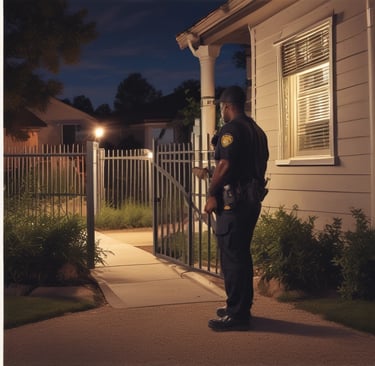
Security problems rarely begin with a dramatic incident. More often, they start with something small—a door routinely left unsecured, a surveillance blind spot, poor access control, inconsistent closing procedures, or nobody clearly responsible for responding when something doesn’t look right.
For Orange County businesses, venues, commercial properties, and property managers, effective security starts before an incident occurs.
At Stego Patrol & Protection, we believe good security is built around three things: prevention, visibility, and response.
1. Uncontrolled Access Points
Doors, gates, loading areas, employee entrances, and restricted spaces can become vulnerabilities when access is not consistently controlled. A door that is propped open for convenience or a key that is shared between employees may seem minor—until someone enters who shouldn’t.
Orange County businesses should regularly review who has access, how that access is granted, and whether former employees, vendors, or contractors still possess keys, codes, or credentials.
Key takeaway: Control who can enter, where they can go, and when they are authorized to be there.
2. Surveillance Blind Spots
Security cameras are only effective when they capture the areas that matter. Entrances may be covered while parking areas, side doors, loading zones, hallways, cash-handling areas, or other vulnerable locations remain outside the camera’s field of view.
Blind spots can also develop as a property changes. Furniture moves, landscaping grows, lighting changes, or equipment is relocated—while the camera system stays exactly where it was.
Orange County businesses should periodically walk their property and compare actual camera coverage with current security risks.
Key takeaway: A camera system should be designed around the property’s vulnerabilities—not simply around convenient mounting locations.
3. Poor Exterior Lighting
Lighting is one of the simplest security measures to overlook. Dark parking areas, walkways, entrances, alleys, and loading zones can reduce visibility for employees, visitors, security personnel, and surveillance cameras.
Burned-out fixtures, poorly positioned lights, landscaping, and deep shadows can create vulnerabilities that may not be obvious during normal business hours.
Orange County businesses should periodically inspect their property after dark—not just during the daytime—to identify areas where visibility needs improvement.
Key takeaway: Good lighting improves visibility, supports surveillance systems, and can discourage unwanted activity before it reaches the building
4. Inadequate Surveillance Coverage
Security cameras are only effective when they capture the areas that matter. Blind spots near entrances, parking areas, cash-handling locations, loading zones, hallways, and other high-traffic areas can leave businesses without critical information when an incident occurs.
Older camera systems may also suffer from poor nighttime performance, inadequate resolution, improper positioning, or insufficient recording retention.
Orange County businesses should periodically review actual camera footage—not simply confirm that cameras are operating—to determine whether people, vehicles, and activity can be clearly identified.
Key takeaway: Surveillance should be designed around risk and usable evidence, not simply the number of cameras installed.
5. Poor Lighting and Visibility
Poorly lit parking lots, walkways, entrances, stairwells, loading areas, and building perimeters can create opportunities for theft, vandalism, trespassing, and other unwanted activity.
Lighting also directly affects surveillance. Even a quality camera system can lose valuable detail when areas are too dark, heavily backlit, or unevenly illuminated.
Orange County businesses should inspect their property after dark, not just during normal business hours. Look for burned-out fixtures, dark corners, landscaping that blocks visibility, and areas where employees or visitors may be difficult to see.
Key takeaway: Good security starts with visibility. If people, cameras, and security personnel cannot clearly see an area, that area deserves attention.
6. No Clear Emergency Response Plan
Security problems become more serious when employees do not know what to do once an incident begins. Medical emergencies, fires, workplace violence, suspicious persons, evacuations, and other critical events require a clear response plan.
Employees should know who to contact, when to call 911, where emergency exits and assembly areas are located, and who has authority to make decisions during an incident.
Orange County businesses should establish simple emergency procedures, review them with employees, and periodically test them. A plan that exists only in a binder is not enough.
Key takeaway: During an emergency, confusion costs time. A simple plan that employees understand can significantly improve the response.
7. Treating Security as a Reaction Instead of Prevention
Many businesses increase security only after something has already happened—a theft, trespassing incident, vandalism, workplace conflict, or other costly event.
A stronger approach is to identify vulnerabilities before they become incidents. That means looking at access control, surveillance, lighting, employee procedures, property layout, incident history, and how quickly help can respond when something goes wrong.
The right security solution also isn’t automatically “more guards” or “more cameras.” It should be based on the actual risks of the property and the people using it.
Key takeaway: Effective security should reduce opportunities for incidents—not simply document or respond to them afterward.
Know Your Vulnerabilities Before Someone Else Finds Them
Security shouldn’t begin after an incident.
Stego Patrol & Protection provides professional security assessments for Orange County businesses, commercial properties, venues, HOAs, construction sites, and organizations that want to identify vulnerabilities before they become costly problems.
We’ll evaluate factors such as access points, surveillance coverage, lighting, property layout, operating procedures, and existing security measures to help determine where improvements may actually be needed.
You don’t necessarily need more security. You need the right security.